
Sustainable Living: 10 Simple Steps to Transform Your Home
Our expert analysis reveals how simple home changes yield massive results. Read our assessment of the best sustainable living hacks for 2024 and beyond.

The journey to sustainable living begins with a single step—transforming your home from a source of waste into a sanctuary of efficiency.
Your home is more than a shelter; it’s a living ecosystem. But for many of us, it’s an ecosystem in crisis, leaking energy and accumulating waste silently.
Modern living often prioritizes convenience over consequence. We buy, we use, and we discard without considering the invisible threads connecting our trash cans to the global climate.
Sustainable living isn’t about moving to a cabin in the woods. It is about making smarter choices within the four walls you already inhabit.
By analyzing data from the United Nations Environment Programme, we can see that household consumption accounts for over 60% of global greenhouse gas emissions.
The Hidden Impact of the Modern Home
Most homes today suffer from an “efficiency gap.” We pay for heating that escapes through cracks and electricity for devices we aren’t even using.
Historically, as noted by the Department of Energy Archives, our infrastructure was built for an era of perceived abundance, not scarcity.
This outdated design leads to what experts call “phantom energy” usage. It drains your bank account while increasing your carbon footprint without providing a single benefit.
Theme 1: Plugging the Energy Leak
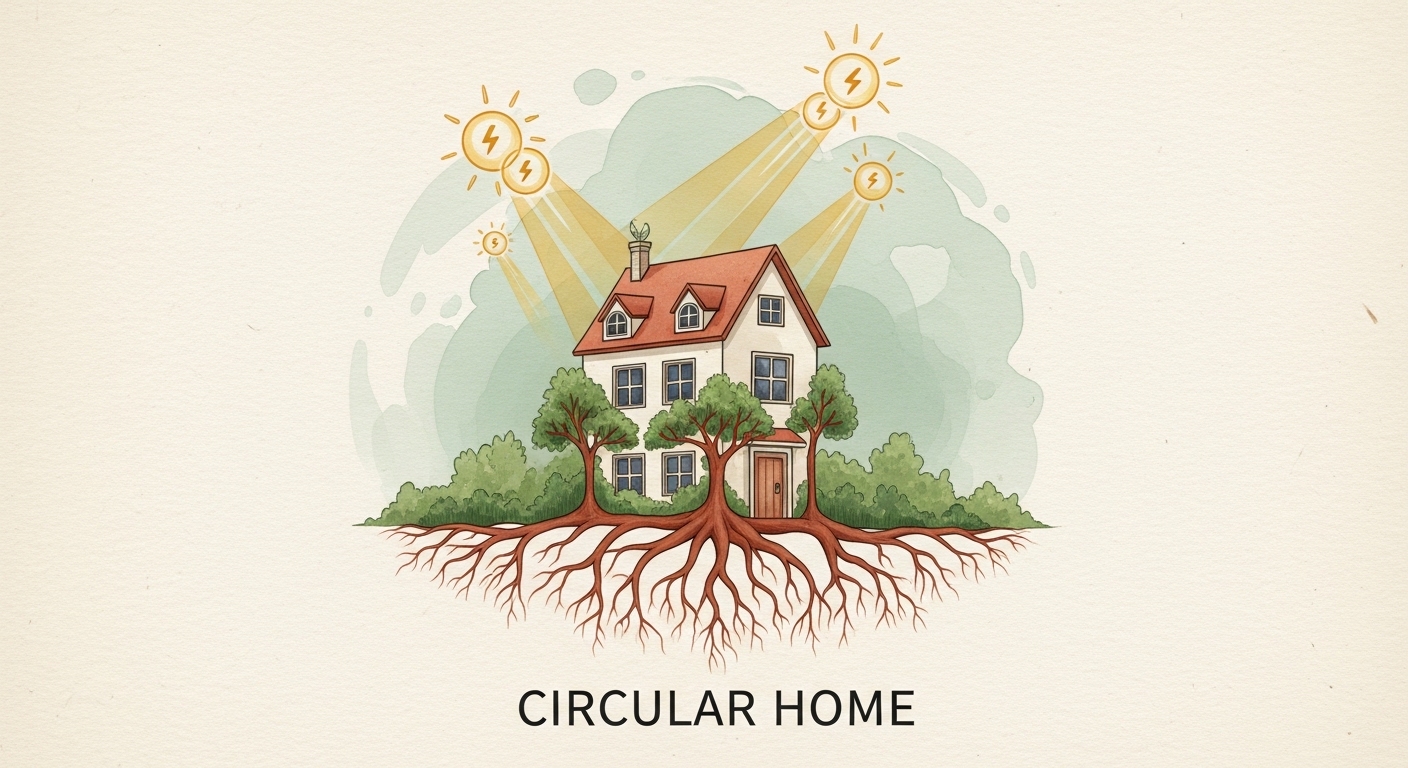
Sustainability isn’t just a list of chores; it’s a beautiful, circular rhythm that connects our daily habits to the earth.
The 5-Minute Home Energy Audit
You don’t need a professional to find the big leaks. Start by feeling for drafts around windows and doors on a windy day.
Check your attic insulation. If you can see the floor joists, you likely need more. Simple weatherstripping can save up to 15% on heating costs.
Smart Tech vs. Old Habits
Integrating technology can simplify your green transition. For instance, using a smartwatch to monitor home alerts keeps you connected to your energy usage.
Pairing smart thermostats with high-quality air purifiers ensures your home remains efficient and healthy simultaneously.
According to Bloomberg Green, AI-driven home management is the fastest-growing sector in residential sustainability for 2024.
Theme 2: The Zero-Waste Kitchen Revolution
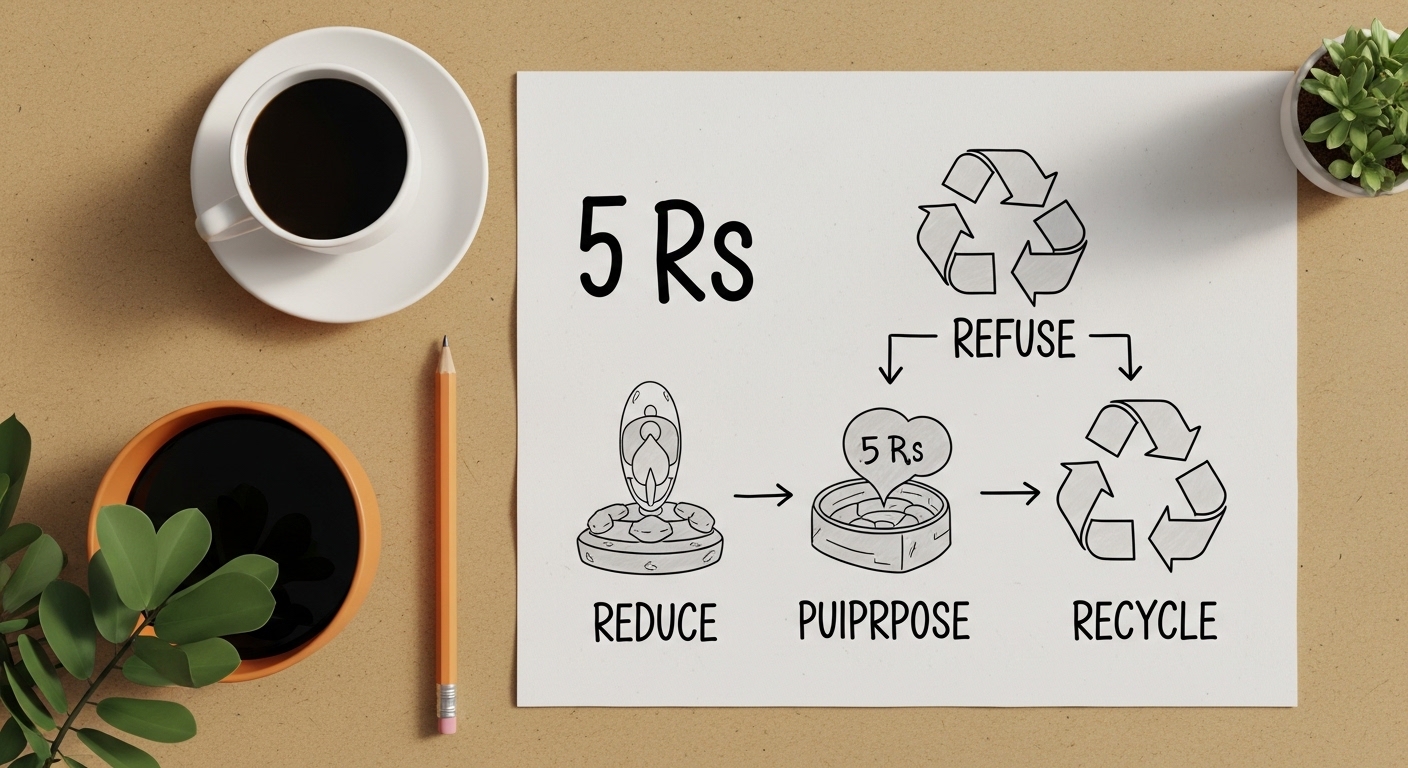
Mastering the 5 Rs: A simple framework to evaluate every item that enters your home.
From Plastic-Heavy to Plastic-Free
The kitchen is the heart of household waste. Transitioning to glass jars and bulk buying reduces the need for single-use plastics.
Many families find success by starting with DIY projects. Making your own lip balm or cleaning supplies reduces chemical runoff and packaging waste.
Composting: The “Black Gold”
Food scraps in landfills produce methane, a potent greenhouse gas. Composting turns that “waste” into nutrient-rich soil for your plants.
Combine a balanced diet rich in whole foods with a composting system to close the loop on your food consumption.
Even small apartments can use Bokashi bins or worm farms. This practice aligns with the “Circular Economy” principles championed by Reuters Sustainability.
Theme 3: Mindful Consumption & Habit Stacking
The No-Spend Challenge Strategy
The most sustainable item is the one you don’t buy. Engaging in a no-spend challenge forces you to appreciate what you already own.
This isn’t about deprivation. It’s about breaking the cycle of impulsive consumption that the New York Times identifies as a major driver of environmental degradation.
Why Your Mindset is Your Best Green Tool
Sustainability is a marathon, not a sprint. Using habit stacking allows you to attach new eco-friendly chores to existing routines.
For example, while brewing your morning coffee, take a moment for a mindful morning practice to set your intentions for the day.
Developing a growth mindset helps you view occasional setbacks as learning opportunities rather than failures.
Cost vs. Environmental ROI
| Action | Upfront Cost | Annual Savings | Impact Level |
|---|---|---|---|
| LED Lighting Swap | $20 – $50 | $100+ | High |
| Composting Scraps | $0 – $30 | $50 (Fertilizer) | Medium |
| Smart Thermostat | $130 – $250 | $180+ | Very High |
| Reducing Meat Intake | $0 (Saves Money) | $200 – $400 | Extreme |
The Final Verdict: Is Sustainable Living Worth It?
Our investigation confirms that sustainable living is not just an ethical choice; it is a financial necessity in the modern economy.
By focusing on small, behavioral changes and high-ROI upgrades like insulation and smart tech, the average household can save over $1,000 annually while significantly reducing their footprint.
The psychological benefits are equally profound. Reducing clutter and practicing a digital detox alongside green habits leads to lower stress and higher life satisfaction.