Guilty Pleasures: Why We Secretly Love ‘Bad’ Movies in 2026
An expert analysis of the “Un-cringe” revolution and the psychological joy of cinematic flaws.
Expert Verdict: In 2026, the traditional “guilty pleasure” is dead. We are witnessing the rise of “Radical Sincerity,” where audiences prioritize emotional resonance and communal joy over critical consensus. This review evaluates why technical incompetence often leads to the most memorable cinematic experiences.
The year is 2026. You just finished a sci-fi thriller with a 12% Rotten Tomatoes score, and you haven’t felt this happy in months. This isn’t a lapse in judgment; it is a calculated pursuit of joy.
For decades, film criticism relied on objective metrics: cinematography, pacing, and narrative logic. However, the modern viewer faces a different problem. In an era of polished, AI-generated content, technical perfection often feels sterile. We crave the human touch, even when that touch is clumsy. This shift has birthed the “Un-cringe” movement—a rejection of ironic distance in favor of genuine affection for flawed art.
Understanding the psychology of comfort shows and movies requires looking past the screen. We are not just watching a movie; we are participating in a ritual of validation. When we embrace a “bad” movie, we are essentially overcoming the fear of judgment from cultural gatekeepers. This is the foundation of the 2026 cinematic landscape.
The “Un-cringe” Revolution: Redefining the Guilty Pleasure
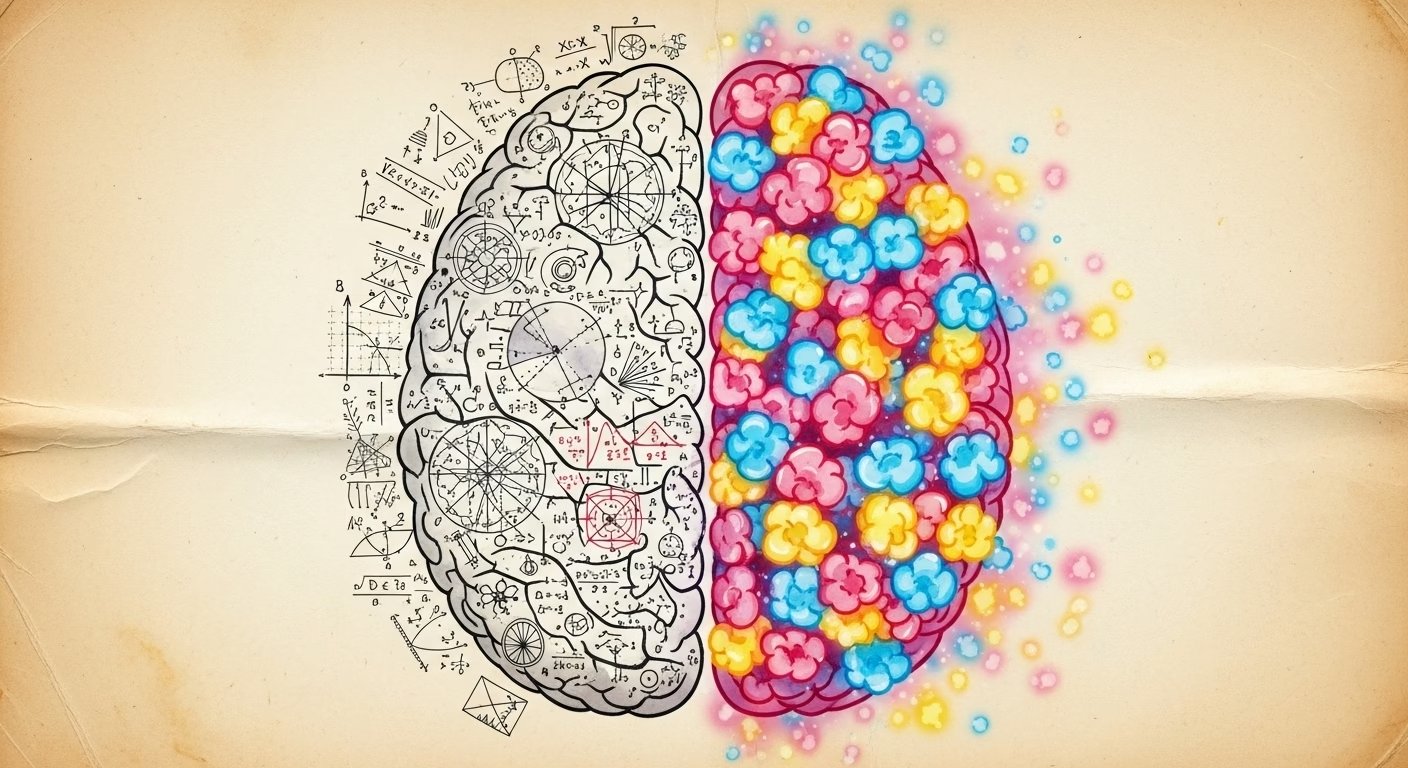
The delicate balance between critical analysis and pure, unadulterated joy.
The Death of Irony and the Rise of Radical Sincerity
Historically, “hate-watching” was the dominant mode of consuming low-quality media. We watched to mock. But as BBC Culture reports, the 2026 trend has pivoted toward “Radical Sincerity.” We no longer watch *Mercy* or the latest *Bridget Jones* revival to point out the flaws; we watch because the flaws make the experience more accessible.
This movement aligns with mindful morning media habits, where viewers seek low-stakes content to regulate their nervous systems. According to the Library of Congress, even films once dismissed as “trash” are now being preserved for their cultural impact. The “guilt” in guilty pleasures is evaporating.
Benign Violation Theory: The Science of the “So Bad It’s Good” Laugh
Why do we laugh when a green screen effect fails? Psychologist Peter McGraw’s “Benign Violation Theory” suggests that humor occurs when something seems wrong (a violation) but is actually safe (benign). A poorly acted scene in a thriller is a violation of professional standards, but because it’s “just a movie,” it becomes a source of dopamine.
The 2026 Verdict: Evaluating the Year’s Best Trash Cinema
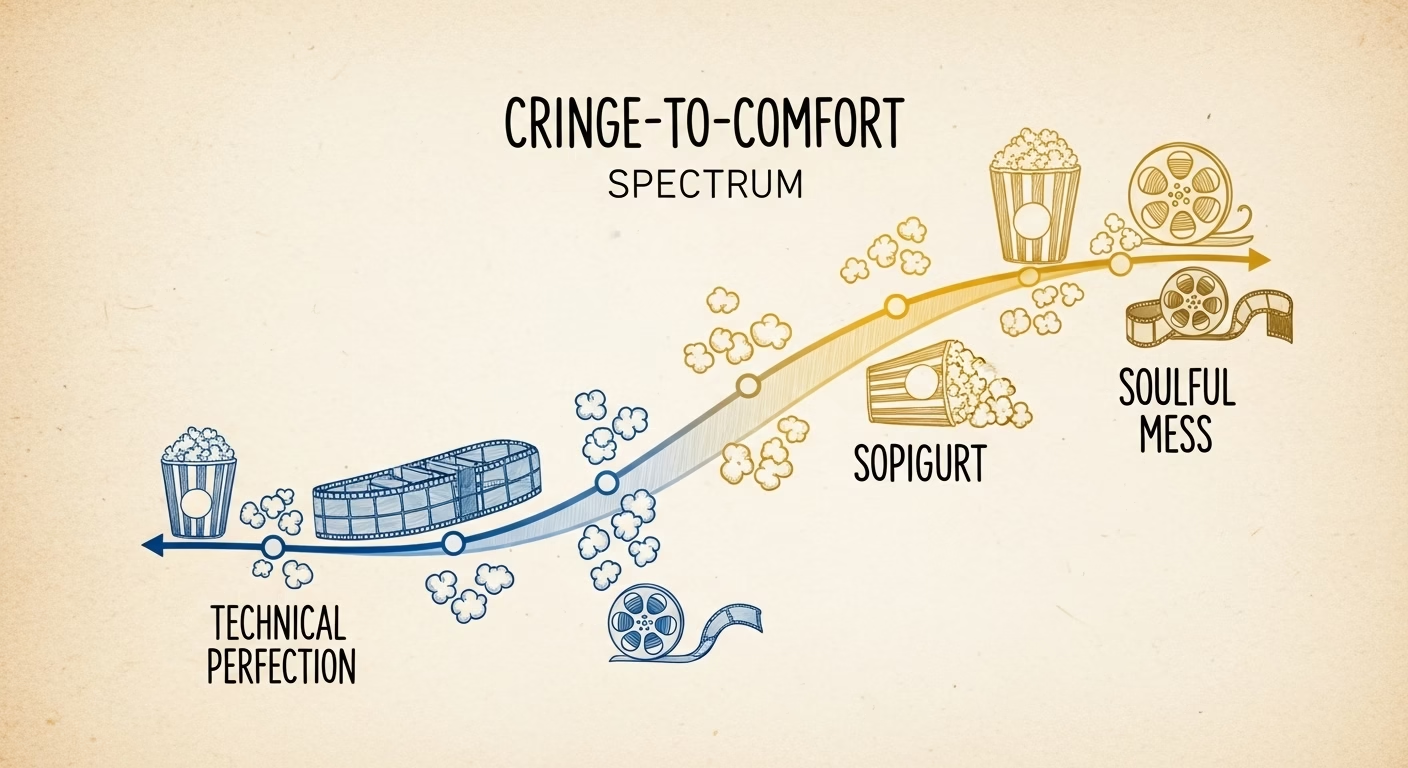
Mapping the ‘Un-cringe’ movement: When a movie crosses the line from ‘bad’ to ‘essential.’
Mercy (2026): A Case Study in “Worst Movie” Buzz
The release of *Mercy* in early 2026 sparked a firestorm on Variety and The Hollywood Reporter. Critics panned its disjointed plot, but audience scores on Rotten Tomatoes hit an all-time high for “bad” movies. It serves as a perfect contrast to high-brow A24 films that demand intense intellectual labor.
When we compare *Mercy* to other underrated movies, we see a pattern. The audience isn’t looking for logic; they are looking for a “vibe.” This “Vibe Coding” is the new metric for success in the Tubi and Netflix 2026 catalogs.
The 5-Point “Cringe-Scale” for Evaluating Movies
- 1. Technical Incompetence: Are the mistakes charming or just lazy?
- 2. Earnestness: Did the creators *try* to make something great? (Crucial for camp).
- 3. Rewatchability: Can you quote the “bad” dialogue?
- 4. Social Potential: Is it better with a group and a portable projector?
- 5. Dopamine Loop: Does it provide a low-stress escape?
Expert Video Analysis: The Psychology of Camp
As discussed in the video above, the evolution of “camp” from Susan Sontag’s 1964 essay to the 2026 digital era shows a consistent thread: the love of the unnatural. Today, AI-driven curation is helping users find these specific “camp” experiences that traditional algorithms used to hide.
The Social Architecture of the Bad Movie Night
Digital isolation has made movie-watching a lonely experience. To combat this, the “Ironic Movie Watch Party” has become a staple of 2026 social life. It’s not just about the film; it’s about the social gaming and media interaction that happens around it.
Participants often use mechanical keyboards for live-tweeting or use apps to play “Bad Movie Bingo.” This transforms a passive experience into an active, communal event.
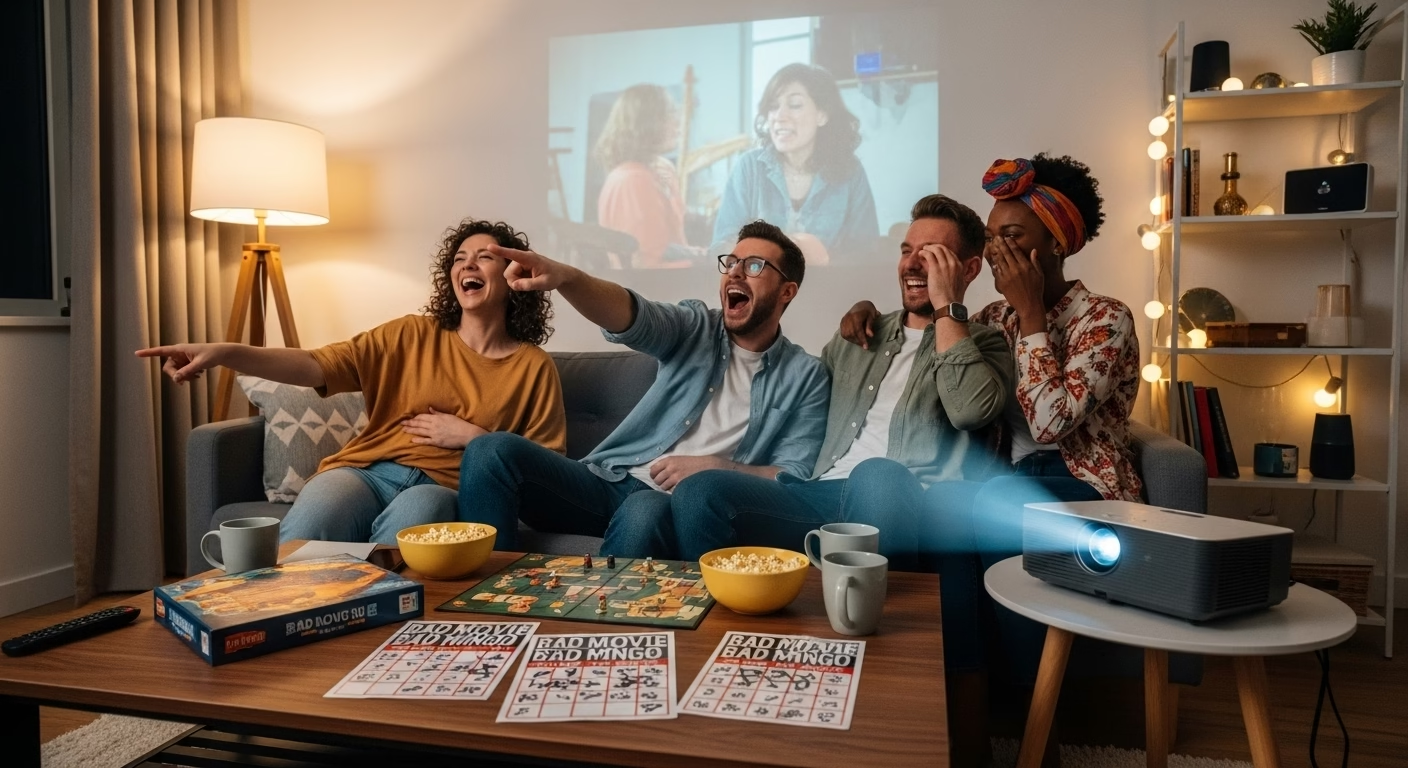
Essential Gear for 2026 Watch Parties
| Feature | Traditional Movie Night | Ironic Watch Party |
|---|---|---|
| Audio | Surround Sound | MST3K-style Microphones |
| Focus | Silent Immersion | Continuous Commentary |
| Screen | OLED TV | Portable Projectors |
| Goal | Narrative Absorption | Shared Catharsis |
Verdict: Embracing the Joy of the Flawed Narrative
The final assessment is clear: your favorite “bad” movie is actually a masterpiece of human connection. In a world obsessed with perfection, the guilty pleasure is a necessary rebellion. Whether you are finding a hidden gem series or rewatching a 90s rom-com for the hundredth time, you are engaging in a form of self-care.
By integrating digital detox strategies and focusing on high-joy, low-stress content, we can reclaim our relationship with entertainment. Stop apologizing for your taste. In 2026, the only “bad” movie is the one you didn’t enjoy.