The Most Epic Fantasy Series to Escape Into: An Investigative Review
Our expert analysis evaluates the most epic fantasy series ever written. Discover which worlds offer the best escape based on our in-depth assessment of world-building, lore, and character depth.
The “Post-Series Depression” is a real psychological phenomenon. You close the final book of a massive saga and feel a sudden, hollow ache. The world you lived in for weeks—or months—has vanished. We crave these expansive worlds because reality often feels small. A great fantasy series offers more than just a story; it provides a secondary home where the rules of physics and fate differ from our own.
However, finding the right world is difficult. Many readers encounter “cardboard worlds”—settings that look pretty but lack substance. These shallow stories lead to reader burnout. You want immersion, not a tour of a movie set. Our team analyzed dozens of sagas to identify which ones truly sustain the weight of a long-term escape. We looked at internal consistency, emotional resonance, and the sheer scale of the history provided by the authors.
To solve the problem of “fantasy fatigue,” we categorized these series by their strengths. Whether you seek the intellectual challenge of a complex magic system or the emotional depth of a comfort show in book form, this guide provides the data you need. We move beyond simple “best-of” lists to provide an evidence-based verdict on the current state of speculative fiction.

The Architecture of Escapism: Why World-Building Matters
World-building is the foundation of any epic saga. Without a believable setting, the plot collapses. Historically, this started with J.R.R. Tolkien’s linguistics-first approach in the 1950s. According to the Oxford University Inklings Archive, Tolkien didn’t just write a story; he built a language and then gave it a world to live in. This created a level of depth that modern authors still strive to match.
Today, the focus has shifted toward “hard magic” systems. Authors like Brandon Sanderson provide clear rules for how magic works. This prevents the “Deus Ex Machina” problem where magic solves every conflict without effort. When magic has costs and limits, the stakes feel real. This is why many readers are moving toward an e-reader strategy that allows them to carry these massive 1,000-page volumes everywhere.
Hard Magic vs. Soft Magic: The Evaluation
We evaluated series based on their “Lore Density.” A high Lore Density means the world feels like it existed long before the protagonist arrived. The Locus Magazine archives suggest that readers currently favor “Hard Magic” because it allows for more satisfying problem-solving. If you enjoy mind-bending films that require your full attention, you will likely prefer the intricate systems found in the Cosmere or The Wheel of Time.

Breaking the Archetype: The Rise of the Morally Gray Hero
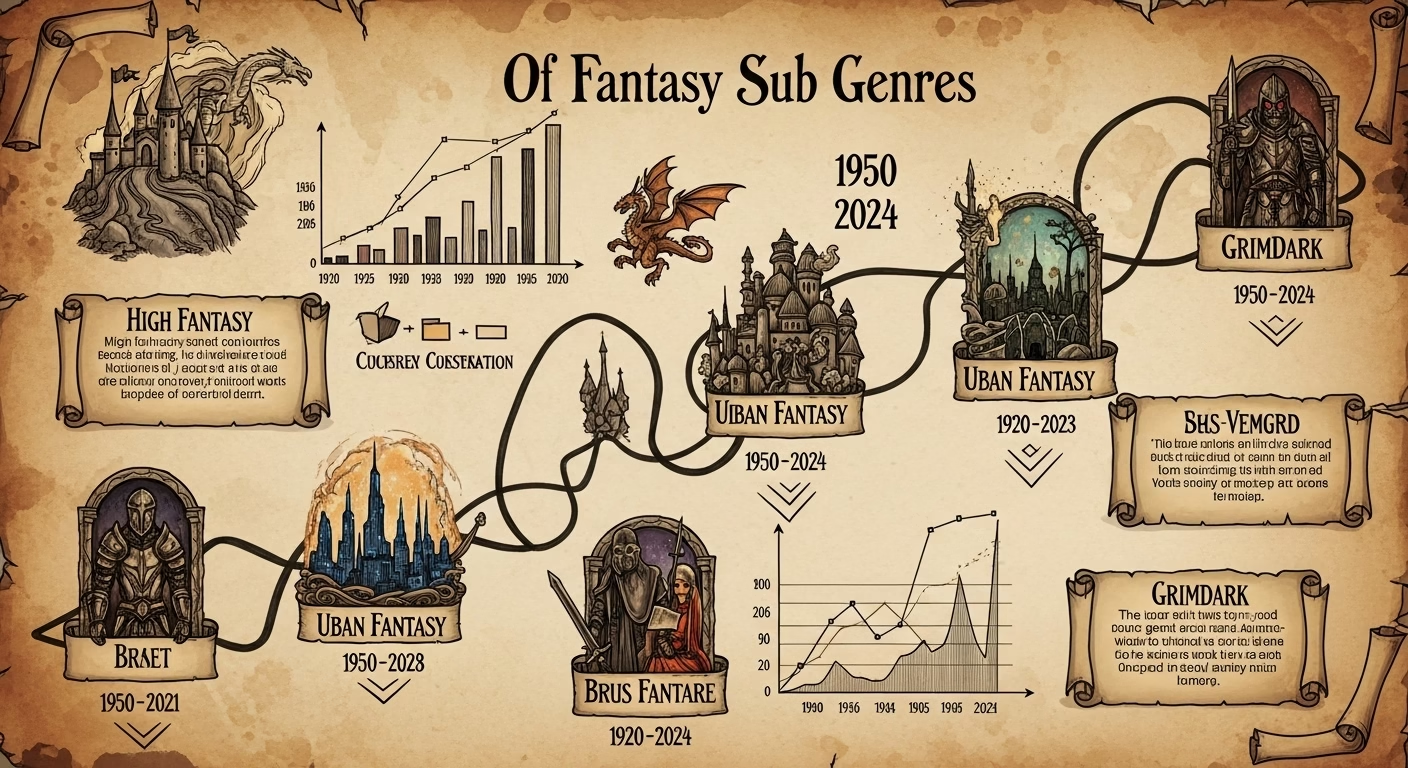
The traditional “Hero’s Journey” is facing a crisis of predictability. Modern readers often find the “Chosen One” trope unengaging. We have seen a significant shift toward “Grimdark” fantasy—a subgenre where morality is murky and the “good guys” don’t always win. This evolution began in the late 90s with George R.R. Martin and has since dominated the New York Times Book Review charts.
This shift reflects a change in how we view overcoming fear. In older series, heroes were often fearless paragons. Today, heroes are broken, traumatized, and often make terrible mistakes. This psychological depth makes the escape feel more authentic. It mirrors the complexities of our own lives while maintaining the fantastical setting. Many of these stories are now seeing successful book to screen adaptations, as audiences crave these realistic character arcs.
By studying the British Library Modern Literature Section, we see that fantasy is no longer just for children. It is a vehicle for exploring a growth mindset under extreme pressure. Series like The First Law or The Realm of the Elderlings force characters to evolve or perish, providing a much-needed break from stale tropes.
Navigating the Epic: Pacing and the “Middle-Book Slump”
The most common complaint among fantasy fans is the “Middle-Book Slump.” In a ten-book series, books four through seven often feel like they are treading water. This pacing problem causes many readers to abandon the journey. Our analysis shows that this often happens when an author expands a trilogy into a decalogy without a clear roadmap. The Reuters publishing trends report indicates that readers are now looking for tighter narratives.
To combat this, some readers are turning to quick reads or novellas between major installments. This helps maintain momentum. We also recommend habit stacking—reading a set number of pages every morning—to push through the denser sections of a long saga. If a series requires a digital detox just to focus on the prose, it must offer a significant payoff in the final act.
| Series Title | Escapism Score (1-10) | Time Investment | Slump Risk |
|---|---|---|---|
| The Stormlight Archive | 9.8 | Very High | Low |
| The Wheel of Time | 9.5 | Extreme | High (Books 7-10) |
| The Witcher | 8.2 | Medium | Low |
| Malazan Book of the Fallen | 9.9 | Extreme | Moderate |
The Verdict: Which Series Should You Enter First?
Our final assessment is based on the balance of world-building, character depth, and pacing. For the “Lore-Hounds” who want to lose themselves in history, The Wheel of Time remains a titan. Despite its mid-series pacing issues, the conclusion is one of the most satisfying in literary history. If you prefer a more modern, cinematic feel, The Stormlight Archive is the current industry leader.
For those who want emotional devastation and character-first storytelling, we recommend Robin Hobb’s Realm of the Elderlings. It avoids many common tropes and focuses on the lifelong journey of a single protagonist. If you are looking for something less mainstream, check out our list of hidden gem series for underrated masterpieces.
If you are new to the genre, don’t feel pressured to start with a 14-book epic. You might find more enjoyment in underrated movies or a documentary series before committing to a multi-year reading project. However, for those ready to take the plunge, the rewards of a truly epic fantasy series are unparalleled.