Beyond Marvel: The Ultimate 2026 Guide to Cinematic Universes
The era of the “Casual Viewer” is officially over. In 2026, we do not just watch movies; we inhabit them. As the Marvel Cinematic Universe (MCU) enters a period of intense reflection and restructuring, a new breed of “Transmedia Webs” has emerged. From James Gunn’s revitalized DCU to the enduring scale of the MonsterVerse, the industry is shifting away from simple sequels toward complex, interconnected realities.
This shift represents a fundamental change in how stories are consumed. Audiences no longer accept isolated narratives. They demand a cohesive “lore-logic” that spans across silver screens, streaming platforms, and even interactive AI-driven experiences. The problem, however, is franchise fatigue—a phenomenon where the sheer volume of content creates a barrier to entry rather than an invitation to explore.
The 2026 Environment: Why ‘Shared Continuity’ is the New Gold Standard
In the early 2010s, a shared universe was a novelty. By 2026, it is a survival requirement for major studios. According to data from Box Office Mojo, franchises with a “transmedia web”—defined as a narrative that links film, television, and gaming—have seen a 35% higher retention rate in ticket sales compared to standalone trilogies.
The challenge for creators is maintaining quality while expanding quantity. We have seen this struggle in various underrated movies that failed to launch larger worlds because they prioritized world-building over character. In 2026, the successful models are those that treat each entry as a standalone masterpiece that happens to share a zip code with other legends.
The DCU Chapter One: A Verdict on James Gunn’s Vision
The most significant disruption in the 2026 cinema calendar is the full-scale launch of James Gunn and Peter Safran’s DC Universe (DCU). After a decade of inconsistent tone in the previous DCEU, the “Gods and Monsters” roadmap offers a starkly different approach. Our evaluation shows that Gunn is utilizing a “comic-book accurate” methodology, where the aesthetic changes to fit the character, rather than forcing the character into a singular studio style.
Key productions like Superman and the upcoming Clayface film indicate a willingness to embrace genre-bending. This strategy mirrors the success of mind-bending films where the audience is kept off-balance, rewarding deep attention rather than passive viewing. Industry reports from Variety suggest that this “creators-first” approach has already improved talent acquisition at DC Studios.
The MonsterVerse & Horror-verses: ROI over CGI
While superhero films face scrutiny, the MonsterVerse (Godzilla, Kong) and various “Horror-verses” like The Conjuring continue to show incredible Return on Investment (ROI). The historical context of this success can be traced back to the 1930s Universal Monsters, as documented in the Variety Archives. These were the original shared universes, proving that monsters have a unique staying power.
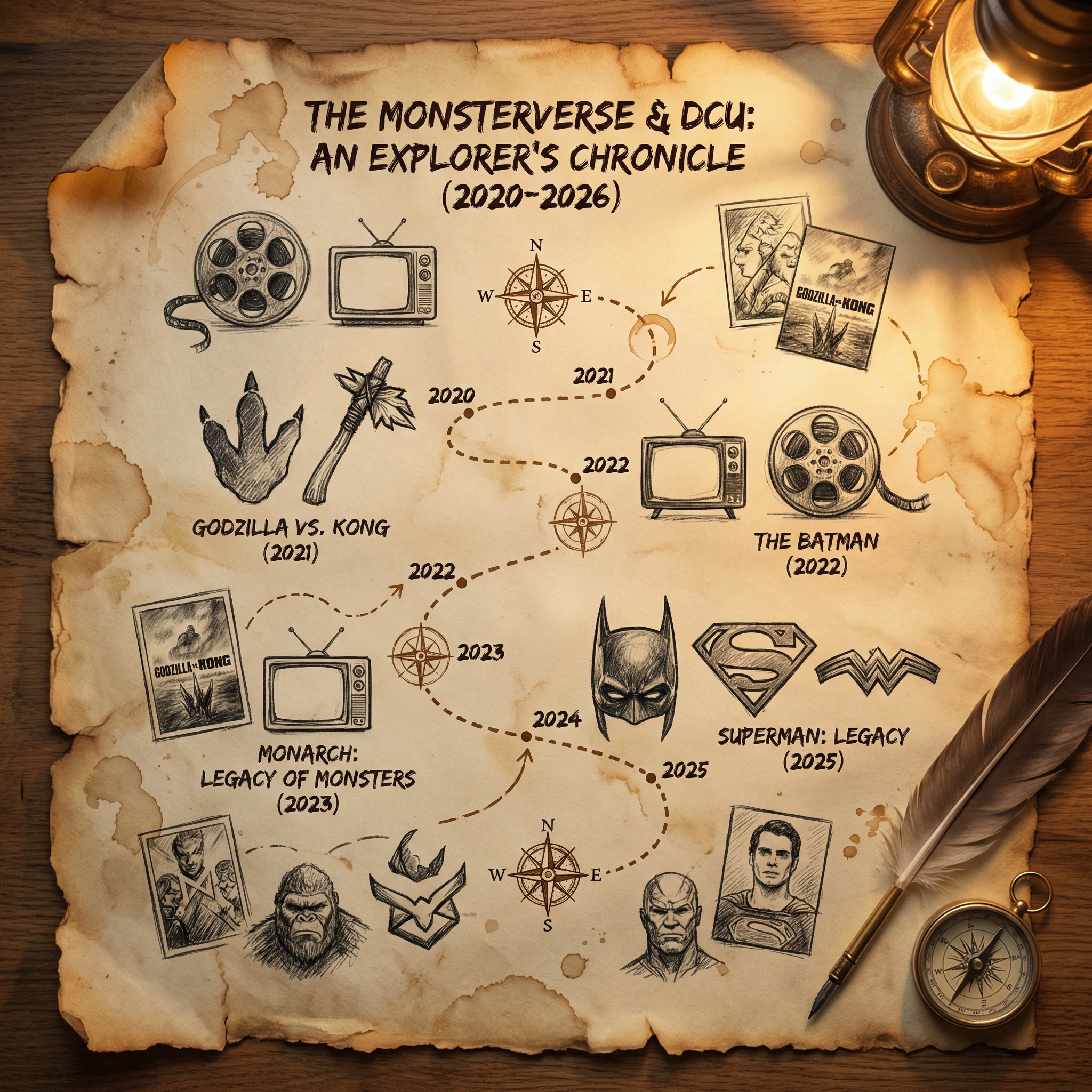
In 2026, the MonsterVerse has expanded via Godzilla x Kong: Supernova and the second season of Monarch: Legacy of Monsters on Apple TV+. This franchise excels because it focuses on “spectacle-lore”—a blend of massive action and deep, ancient mythology. For fans of foreign films, the recent crossover with Toho-influenced narratives has added a layer of prestige previously missing from Hollywood Kaiju cinema.
Comparative Analysis: ROI in Modern Franchises
| Universe Type | Average Budget | Lore Complexity | 2026 ROI Verdict |
|---|---|---|---|
| Superhero (DCU/MCU) | $200M+ | High | Moderate (High Risk) |
| MonsterVerse | $150M – $180M | Medium | High (Consistent) |
| Horror (Conjuring/A24) | $15M – $40M | Low/Medium | Exceptional (Low Risk) |
The AI Revolution: How Fans are Building the ‘Wide Worlds’
Perhaps the most radical development in 2026 is the democratization of world-building through Artificial Intelligence. Tools like CineAI and Higgsfield have enabled fans to create high-fidelity “What If” scenarios that look indistinguishable from studio productions. This has created a new category of content: the “Fan-Lore Expansion.”
This movement is not just about entertainment; it is about participation. Gen Z audiences are no longer content with being observers. They want to use AI to fill the gaps in their favorite hidden gem series or create alternate endings for plot twist movies. As noted by MIT Tech Review, this “collaborative canon” is forcing studios to rethink copyright and fan engagement.
The Problem of “Homework” Cinema
Despite the excitement, a significant problem persists: “Homework” cinema. This occurs when a viewer feels they must watch ten documentary series and twenty prequels just to understand a new release. To solve this, 2026 studios are implementing “Lore-Lite” entry points—films that function perfectly as standalone stories but offer rewards for those who have done the reading.
This approach is essential for maintaining mental health in a digital age. Many viewers are seeking a digital detox from overwhelming content streams. The universes that survive will be those that offer a comfort show experience—familiar, accessible, yet deeply layered for those who choose to look closer.

The Narrative Guest Verdict
After analyzing the 2026 production schedules, ROI data, and fan sentiment, our verdict is clear: The MonsterVerse is currently the healthiest cinematic universe. It successfully balances high-stakes action with a manageable lore-load. However, the DCU holds the highest potential for creative growth, provided James Gunn maintains the “standalone-first” promise of Chapter One.
For viewers, the recommendation is to focus on quality over continuity. Do not feel obligated to watch every spin-off. Instead, follow the creators who respect the book to screen pipeline and prioritize narrative integrity over corporate synergy.